Canada’s history with tulips began during World War II when the Dutch royal family sent tulip bulbs to Ottawa as a token of gratitude. The tradition continues today, with the Dutch royal family sending tulip bulbs to Ottawa every year.
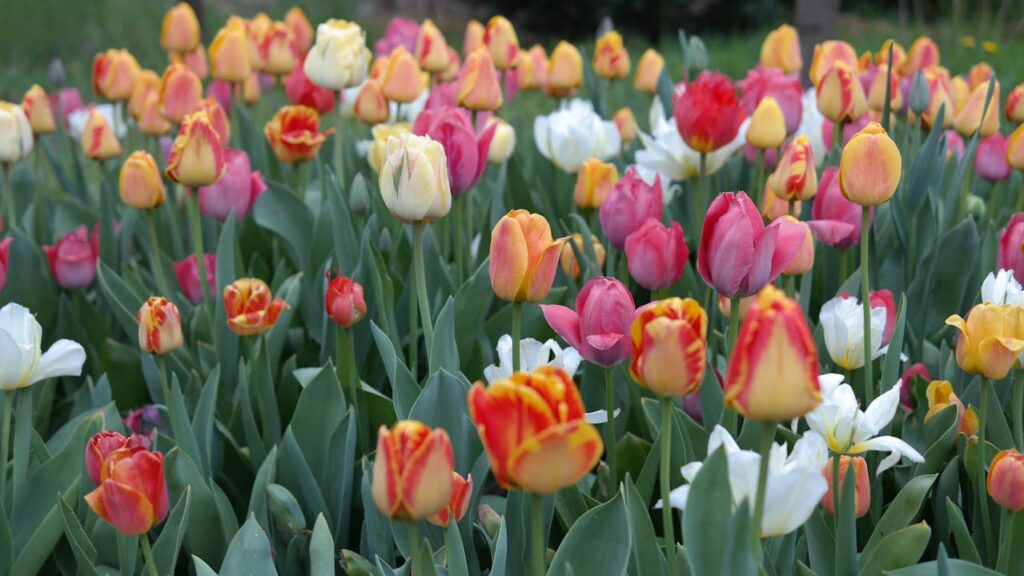
Every spring, Ottawa-Gatineau comes alive with a dazzling display of colourful tulips. Close to one million of the flowers bloom in parks and gardens across the Capital Region. The tulips are part of a tradition that dates back to the Second World War, and are a symbol of the enduring friendship between Canada and the Netherlands.
The Queen Juliana Gift Bed is filled with tulips given to Canada’s Capital by the Dutch Royal Family and the Dutch Bulb Growers Association. The annual gift of tulips represents the long-lasting friendship between Canada and the Netherlands.
Ottawa has been hosting the Canadian Tulip Festival since 1953, and it’s now the largest of its kind in the world. The popular annual event attracts hundreds of thousands of visitors from around the world who long to see over a million tulips blanketing the Ottawa region. But the festival’s roots run much deeper than the beautiful spring-blooming flower. Here’s a brief overview of Canada and its relationship with tulips.
It all started in World War II when the future Queen of Netherlands, Princess Juliana, and her two young children were forced to flee Nazi-occupied Netherlands. The three of them found safe-haven in Canada, an allied country far away from the frontlines. In 1943, the bond between our two countries was made even stronger when the princess gave birth to her third child at Civic Hospital in Ottawa, Princess Margriet.
When the war ended in 1945, the Dutch Royal Family sent 100,000 tulip bulbs to Ottawa as a thank you for Canada’s role in liberating the Netherlands. Canada now receives 10,000 tulip bulbs every year from the Dutch Royal Family and its people, a lasting gift known as the “Tulip Legacy” which inspired the festival. The tulips are in Queen Juliana’s favourite colours, pink and purple, and are planted in dozens of beds, large and small, around the Capital Region.
Since then, the Dutch Royal Family has sent tulip bulbs to Canada’s capital each year – 2025 marks the 80th anniversary of this Gift of Tulips, and the end of World War II.
Tulips are planted in dozens of beds, large and small, around the Capital Region. The highest concentrations of tulips are found in these places in the Capital Region: Commissioners Park, Major’s Hill Park, and the Garden of the Provinces and Territories in Ottawa; and Malak’s Bed and Montcalm-Taché Park in Gatineau.
The first Canadian Tulip Festival in 1953 was led by the Ottawa Board of Trade, at the suggestion of world-renowned photographer Malak Karsh. Karsh is considered the founder of the Festival and his photographs have immortalized the tulip. The tulip was designated Ottawa’s official flower in 2001.
For a dozen years between 1994 and 2006, the Canadian Tulip Festival celebrated countries all across the world who have also adopted the tulip as a symbol of international friendship. In 2020, the planned celebrations for the 75th Anniversary of the Liberation of the Netherlands were conducted virtually due to the COVID-19 pandemic, using display the tulips. aerial photography and 360-degree image captures to display the tulips.
As part of the Liberation75 commemoration campaign, 1.1 million orange crown-shaped Liberation 75 tulips (formerly known as the Orange Emperor variety), in addition to the deep red Canadian Liberator tulips, were sent from growers in the Netherlands and planted across Canada to honour the 1.1 million Canadians who served during World War II.
That is a brief overview of Canada, its relationship with tulips and the Netherlands, and how our bond with both has continued to grow over the years. They say that those who don’t learn from history are doomed to repeat it and thanks to the Netherlands, Canada will never forget the tulip and the sacrifices our loved ones gave so that we could have a better future.
The tulip helps represent our resiliency as a nation and how we always come to the aid of those in need. In short, it represents what it means to be Canadian, and the hope is that the festival will help us to never forget that.
Joshua Cooper | Contributing Writer