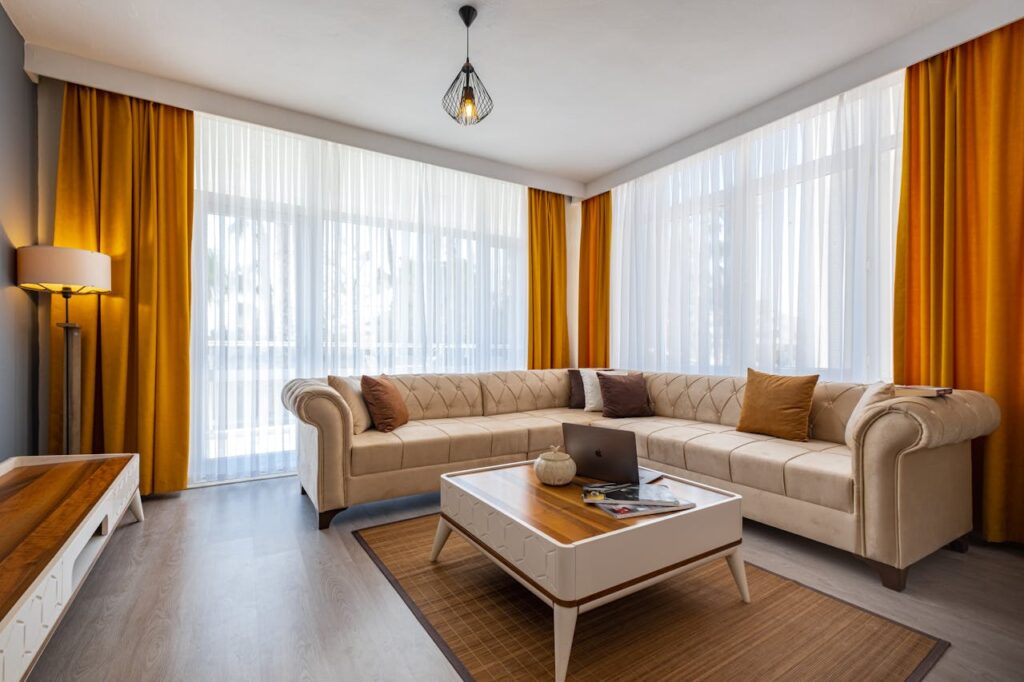
The idea of the modern living room as we know it originated in the mid-19th century. Previously known as the parlor in the 16th century, and used primarily for conducting business, the living room evolved with the rise of the middle class. It was here that living rooms became dedicated to leisure and entertainment. The living room is the place where we spend most of our time bonding with our families and as such it is important to make it functional and inviting. If you are looking to renovate your family space or are simply looking to improve functionality, you have come to the right place. We have curated a list of seven living room layout mistakes from designers, architects, and more.
Impeding the Traffic Flow
One of the biggest living room layout mistakes to avoid, according to the experts, is to ignore the natural flow of traffic. For a functional living room, one should pay attention to traffic flow when moving around the space to ensure there aren’t any unexpected obstacles. A living room is much more inviting when you can move about the space freely and comfortably.
Lacking Surface Space
An important thing to pay attention to when planning your living room layout is how many tabletop surfaces are available to your guests, and how accessible they are. The last thing you want when you are entertaining is your guests awkwardly standing around or hovering near the entryway. The general rule is every seat should be arms-length from a tabletop or other surface. A coffee table and side tables are great, but don’t be afraid to branch out and get creative as well.
Pushing Furniture Against the Walls
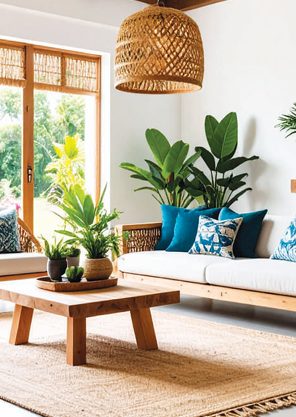
A common misconception in interior design is that the furniture must always be pushed up against the walls. Now in some cases, depending on the size of your space, this may be your only option; however, in most cases, this can make the room look smaller. Further, it can leave the room feeling empty and adrift. Rather than moving furnishings to the outer most limits of the room, experts suggest finding a focal point. Whether that’s the TV, a window, a piece of art, or a fireplace, choose what feels right to you.
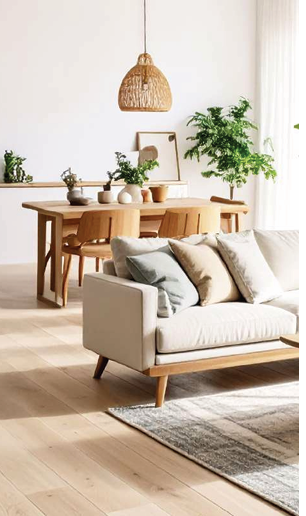
Once the focal point has been identified, you can build out from there, placing your coffee table, couch, and accent pieces around it to create a warm inviting space. If you are blessed with a large living room, you can also place a couch in the centre of the room to divide the room and create more usable space, effectively splitting it into two more functional rooms, like a living room on one side of the couch and a dining space or home office on the other.
Forgetting to Balance the Space
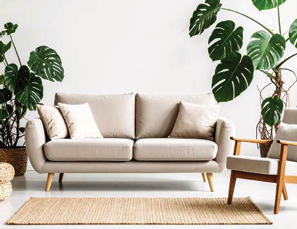
Much like any design element, an important factor of any successful living room layout is balance. Make sure you offset certain pieces of furniture and décor with equally weighted counterparts to maintain equilibrium in the room. For instance, if you have an oversized sofa on one side of the room, you could balance it with a large monstera plant and an elegant armchair. Though balancing your pieces is important, it is equally important to choose pieces that are the appropriate size for the room, in order to maintain proportional balance as well.
Overcrowding the Space
Be cautious not to over-decorate or over-furnish your room. Cramming too much stuff into the living room will make it feel cluttered and overwhelming, which will ultimately discourage people from using the space. Make an active effort to scale back on unnecessary items and increase “white space” between your furnishing and design elements. This will help the space feel welcoming, relaxed and elegant.

Choosing the Wrong Rug Size
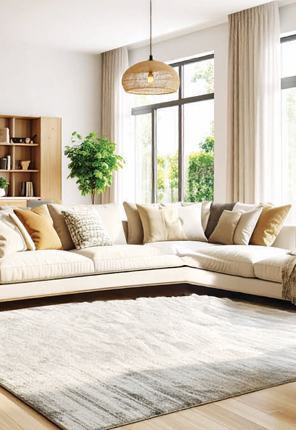
Choosing the wrong size of rug can make your room appear much smaller than it actually is, so it is important to know what to look for. A good rule of thumb is to choose a rug large enough to fit all of your furniture on it. If you can’t, it’s a clear sign you’ve got the wrong size. Bigger is always better where rugs are concerned.
Jessica Gardner | Contributing Writer