Flexibility is often treated as an afterthought, something reserved for the final five minutes of a workout. Yet, true strength is rarely sustainable without mobility. Muscles that lengthen and contract efficiently support better posture, stronger lifts, improved balance, and reduced injury risk.
For readers of Débu, fitness is not about extremes. It is about longevity. The goal is not to contort the body into dramatic shapes, but to cultivate fluid, functional movement that enhances everyday life, from climbing stairs with ease to carrying groceries without strain.
Below are five foundational movements that blend stretch and strength, building flexibility that lasts. Perform them slowly, focusing on control rather than speed. Two to three rounds, three times per week, can transform how your body feels and performs.
The Deep Lunge with Rotation
Targets: Hip flexors, glutes, spine
Step one foot forward into a lunge, lowering the back knee toward the floor. Place one hand inside the front foot and rotate the opposite arm upward to open the chest. Hold for three breaths, then switch sides.
This movement unlocks tight hips—a common issue for desk workers—while strengthening and stabilizing muscles around the pelvis. The gentle spinal twist improves rotational mobility, essential for daily activities and athletic performance alike.
Forward Fold with Active Reach
Targets: Hamstrings, calves, lower back
Stand tall, hinge at the hips, and fold forward. Instead of collapsing, actively reach through the crown of your head and engage your thighs.
The key here is activation. When you lightly contract the quadriceps while stretching the hamstrings, you teach the opposing muscle groups to work together. The result is flexibility supported by control.
Glute Bridge Hold
Targets: Glutes, core, hip stabilizers
Lie on your back with knees bent and feet planted. Press through your heels and lift your hips. Hold for 20–30 seconds while maintaining a neutral spine.
Strong glutes protect the lower back and improve posture. This movement counteracts prolonged sitting and reinforces proper hip alignment.
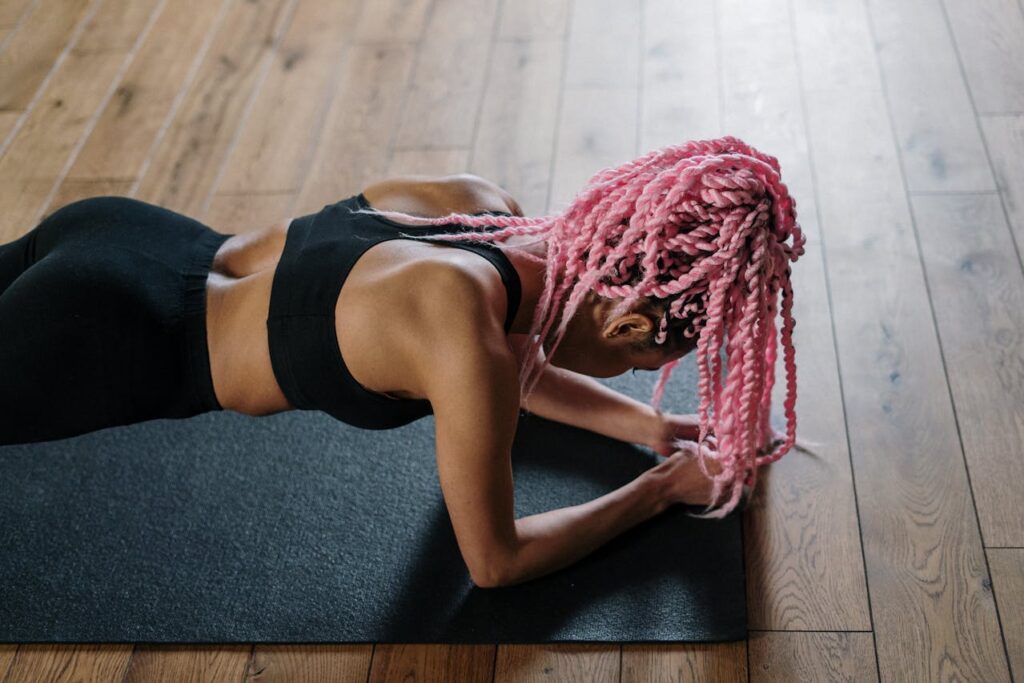
Plank with Shoulder Tap
Targets: Core, shoulders, balance
In a high plank position, slowly lift one hand to tap the opposite shoulder. Keep your hips steady and avoid swaying.
Beyond core strength, this movement develops stability and coordination—critical components of flexibility in motion.
Standing Hamstring Stretch with Pulse
Targets: Posterior chain
Place one heel on a low surface. Hinge forward slightly, then gently pulse in and out of the stretch. Avoid bouncing.
The small, controlled movement encourages gradual muscle adaptation without strain.
Why Flexibility Is Strength
Flexibility is not about softness; it is about resilience. Muscles that can lengthen under tension are less likely to tear. Joints that move freely distribute force efficiently. When strength and stretch coexist, the body performs with confidence.
Approach each session with intention. Breathe deeply. Move deliberately. In time, you will notice subtle shifts: easier mornings, smoother strides, steadier balance.
Strength, after all, begins where tension ends.
Jerri Lyons | Contributing Writer