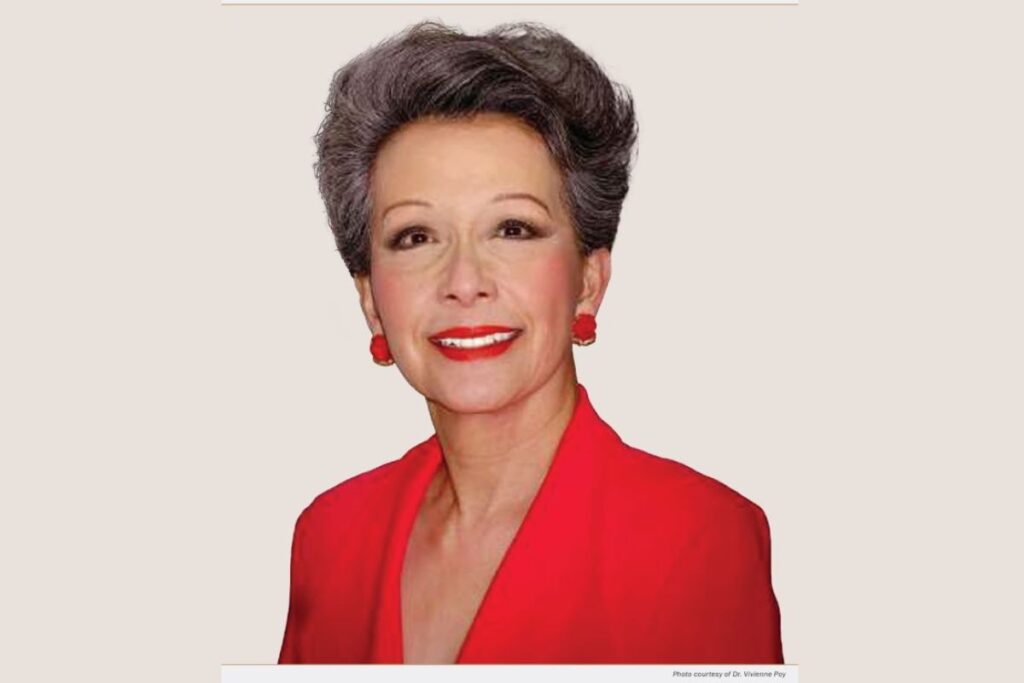
Dr. Vivienne Poy made history in 1998 as the first Canadian of Asian descent appointed to the Senate of Canada. Born in Hong Kong, she immigrated to Canada and built a successful fashion business before transitioning into politics. During her tenure, she championed policies on multiculturalism, gender equality, and Asian representation. She was instrumental in recognizing May as Asian Heritage Month and played a key role in advocating for gender-inclusive language in the national anthem. In this interview, Dr. Poy shares her experiences navigating political challenges, her contributions to diversity and inclusion, and advice for policymakers supporting minority communities in Canada.
As the first Canadian of Asian descent in the Senate, what challenges did you face in advocating for multiculturalism and gender equality?
My first challenge was simply learning how to navigate Parliament. I hadn’t met anyone there, including the Prime Minister, and my appointment was a surprise. Some colleagues welcomed me, but others questioned my presence — not just as a woman, but as an Asian woman. I had to find allies while identifying those who would never support me. Sheila Copps, the heritage minister at the time, was one of my biggest supporters, especially in matters of multiculturalism. Advocacy requires strategy — knowing who will back you and lobbying the right people.
When I introduced a motion to amend the national anthem for gender equality, I faced resistance, particularly from one senator who intentionally delayed the process. It took 17 years, but eventually, the amendment passed, proving persistence is key in policymaking.
You played a key role in establishing May as Asian Heritage Month in Canada. What impact has this recognition had on national discourse around diversity and inclusion?
Asian communities have long been told to work hard and avoid making
trouble, which led to our invisibility in Canadian society. When I was appointed to the Senate, I realized that despite our long history in Canada, we lacked visibility. Many people even assumed “Asian” referred only to East Asians, not recognizing that Asia spans from the Middle East to East Asia. I wanted to change that narrative.
In 2002, the federal government officially declared May as Asian Heritage Month, creating a platform for celebrating our contributions. Today, it has taken on a life of its own — government institutions, businesses, and schools actively participate. More importantly, it has encouraged Asians in Canada to take pride in their heritage and claim their space in national discussions.
Given your background in business and policy, what advice would you give to policymakers seeking to support Asian entrepreneurs and female business leaders in Canada?
Canada needs a strong business environment, and one key aspect is reducing barriers rather than over taxing businesses. If we create an economy that encourages growth, more people will be employed and contribute to the tax base. Asian entrepreneurs, like all entrepreneurs, have international networks that can be leveraged to strengthen Canada’s global ties. More needs to be done to utilize these connections.
As for women in business, they should be encouraged, but also recognized for their strengths. Women excel in interpersonal relationships, which is crucial in business management. A balanced approach, where men and women bring their complementary skills to leadership, benefits companies and society as a whole.
With increasing global discussions on equity and representation, how can Canada further strengthen policies that support diverse communities in leadership and decision-making roles?
Proportional representation in leadership roles should be considered, but it must be based on merit, not tokenism. People from diverse backgrounds must actively work toward leadership positions by gaining experience and developing their skills.
In government, policies can be designed to encourage representation, while in corporations, leadership diversity depends on the company’s values and priorities. However, true inclusion isn’t about filling quotas — it’s about ensuring capable individuals from all backgrounds have equal opportunities to contribute meaningfully to decision-making.
Shweta Gandhi | Contributing Writer