
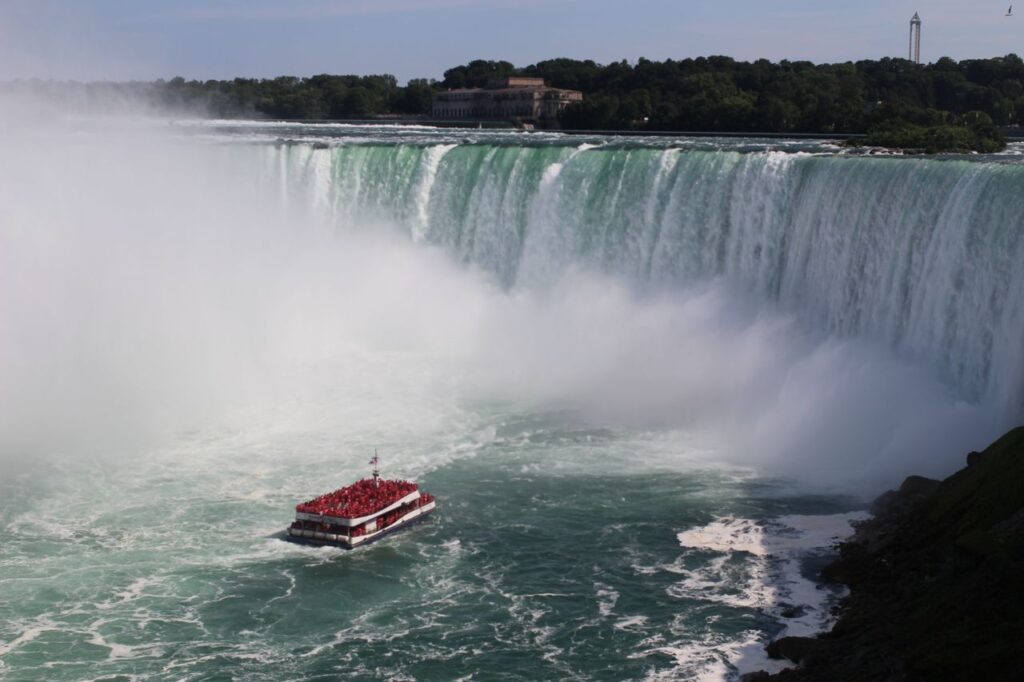
Niagara Falls is a mesmerizing sight to behold, with more than 750,000 gallons of water flowing every second during peak season; it’s not only captivating to see but also awe-inspiring to experience. Situated on the border of Canada and the United States, Niagara Falls is a natural wonder and a major tourist attraction.
Beyond their stunning, picturesque appearance, these roaring waters are a source of environmental pride, economic vitality, cultural richness, historical depth, and scientific intrigue. Let’s look at a few other reasons why exploring Niagara Falls is an adventure worth taking.
A Marvel of Design
Niagara Falls consists of three falls: the Horseshoe Falls, the Bridal Veil Falls, and the American Falls. The Horseshoe Falls are marvelous in nature, considered the largest; they take their name from their shape and are located on the Canadian side. The Bridal Veil Falls and the American Falls are on the other side of the border. The Bridal Veil Falls is considered the smallest of the three waterfalls that make up Niagara Falls. Besides being marvelous to look at, the falls play an important role in Niagara’s ecosystem. The surrounding area supports a variety of plants, animals, and aquatic life.
A Tourist Magnet
Tourism plays an important role in Niagara Falls’ significance to Canada and Ontario. Approximately 22 million people visit Niagara Falls each year across the American and Canadian sides. In Canada, the falls draw more than 12 to 14 million visitors each year. This plays a huge role in the economies of both Canada and the United States, bringing in a source of revenue. The tourism industry also supports thousands of jobs in Canada, with many hotels, motels, restaurants, entertainment venues, and other businesses surrounding the Niagara area.
A Piece of History
Another draw of Niagara Falls is its important role in the region’s history. For many years, Indigenous people have lived in and around the Great Lakes region before America was discovered. The presence of indigenous people played an important role in European settlement and trade. During the War of 1812, the Niagara region was important because of its location along the border between Canada (British North America) and the United States. Several historical sites continue to grace the area and help thousands of Canadians understand Canada’s past.
A Source of Electricity
Believe it or not, Niagara Falls isn’t only a marvelous sight to see but also generates renewable energy. The Niagara River itself has been used to produce electricity for thousands of people in the Province of Ontario. The water diverted from the region helps local households in Ontario benefit from this natural resource by producing power.
Culturally Significant
Visiting Niagara Falls is a quintessential experience; it has also become a rite of passage for many children in Ontario’s schools, who learn about its unique history and importance. After all, Niagara Falls contributes to Canada’s international image. To this day, Niagara Falls appears in photographs, paintings, films, and literature depicting Canada; in essence, it has come to symbolize the country in many ways. The falls also play an important role in representing Canada’s close relationship with nature; after all, Canada is considered a nature lover’s paradise with vast forests, lakes, mountains, and rivers.
Niagara Falls holds a special place in the hearts of Canadians and Ontarians alike. Beyond its breathtaking beauty and status as a tourist magnet, it has stood for over 12,000 years, weaving itself into the very fabric of Canada’s story.
David Messiha | Staff Writer