Have you ever wished that your home would be a bit bigger? We all do sometimes. As the cost of living rises, more homeowners are purchasing smaller homes.
But who said that living in a tiny home has to be boring? Living in a tiny home can be a charming experience. With a few design changes, you can make a small space appear much bigger. If you would like a few tips, look no further.
Pay Close Attention to Scale
The way your furniture fits in a given space plays a pivotal role in how a room appears. There are several elements you need to consider, including furniture, lighting, and architectural details. All of these can make a space appear large or small, depending on how you arrange them.
One key aspect to pay attention to is not blocking traffic flow; arrange the furniture so people can move through easily. It is advisable to check the measurements of your pull-out sofas and Murphy beds. Ideally, you want to ensure that there is space on both sides of a bed.
Define Clear Zones
To create an open, spacious feeling in a small room, you will need to define your zones. For example, you might have a dining area, a workspace, and an entryway. Make sure each area is well defined. You don’t need to include walls; you can define an area with a rug, lighting, or furniture.
When working with an open concept plan, these items can subtly delineate areas for working, sleeping, and relaxing. Keep in mind that you want a space to feel welcoming and relaxed; to that end, ensure you maintain a unified design aesthetic throughout your décor plan to make your space feel more cohesive.
Raise the Roof
High ceilings are a great way to create more space; believe it or not, they give the illusion that your room is much bigger. Although that might require significant renovation on your part, raising the roof makes a space look chic and maximizes light and open-air circulation.
A taller roof creates more vertical space, making your room appear less cramped. A high ceiling also allows you to create more storage space; you can easily install high-up shelves. You can also include other decorative elements, such as beadboard or wood beams.
Prioritize Multi-Functional Furniture
One of the best ways to reduce clutter is to purchase multi-functional furniture. To that end, you can choose pieces that fold, nest, or serve other purposes, thereby freeing up more space in your room. For example, in our day and age, a kitchen peninsula can easily serve as a dining table. Moreover, a storage- ottoman can serve as a footrest and a book storage spot, and it can also double as a chair when you have several guests.
Make the Most of Natural Light
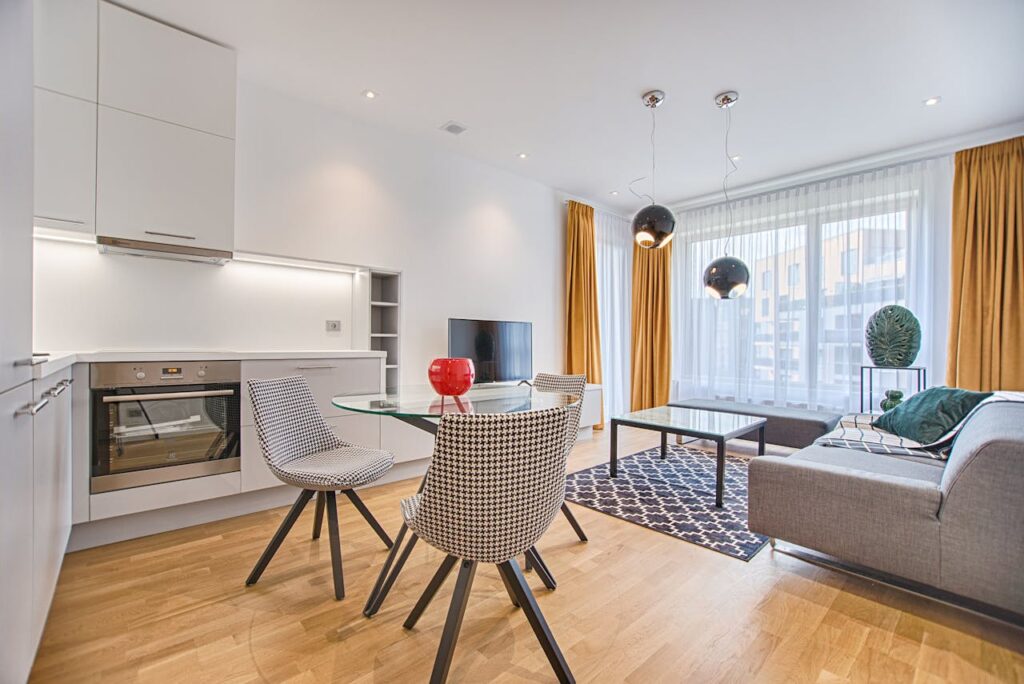
Large windows are ideally suited not only for additional light but also for making a space appear bigger. If you don’t have a large window, invest in one if possible. Designers say that large windows blur the lines between indoor and outdoor space, creating a sense of openness, making a room appear much bigger. Begin by choosing the right style for your room, whether it is floor-to-ceiling, picture, bay, or bow windows.
Paint the Walls Brightly
Bright and neutral colours like chic cream or soft white create an airy interior, whereas dull colours like grey or black create a more sombre atmosphere. Bright colours usually reflect more light, making the room feel spacious. Ensure you accentuate the space with the right paint colours; after all, you don’t want your room to look awkward.
Incorporate Hidden Storage
A wise move to create more space in your room is to ensure that every nook and cranny is used to its full capacity. Designers recommend looking at dead corners, hidden spaces where cabinets are trimmed out, or areas above doors and under stairs that are often overlooked and unused. The key is to integrate storage seamlessly, so your stored items are inconspicuous and blend in with the rest of the furniture and architecture.
David Messiha | Staff Writer